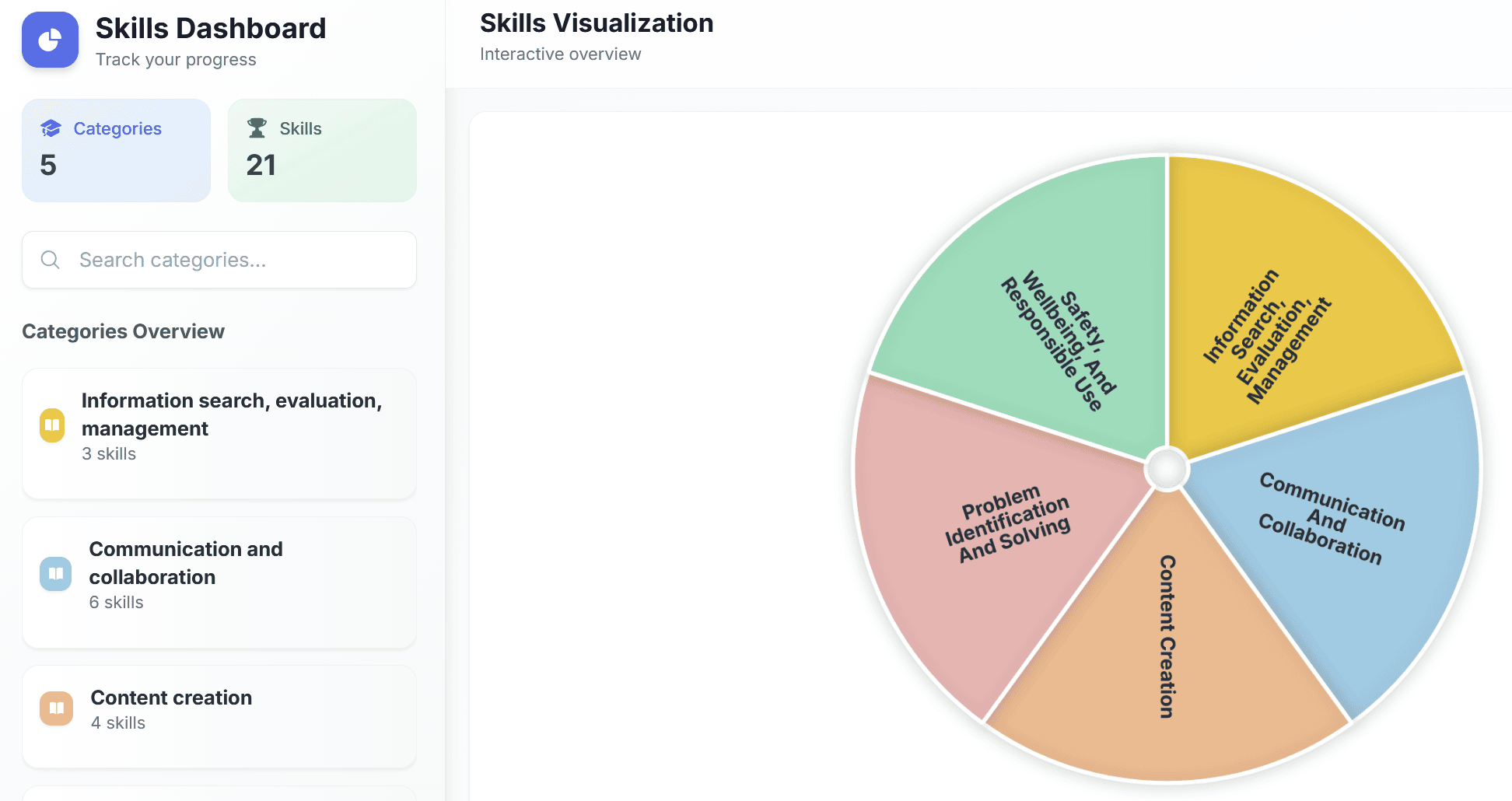
The European Commission launched DigComp 3.0 on 27 November 2025 – an important update to of this digital competence framework. It’s comprehensive, well-structured – and it’s locked in a PDF. At the KIC, we’ve been creating a Skill Framework Builder that convert this kind of static information into an interactive, machine-readable framework. What would typically take weeks of development effort from a team of programmers and data scientists took us just hours. Educators or skill experts can do the same, simply using our free of charge tool.
The challenge with custom data formats
DigiComp 3.0 is the go-to reference for addressing digital competences and defining skill profiles across Europe. While the framework does include a JSON-LD representation, it uses a custom format specific to DigiComp. This means organizations still face integration challenges when trying to incorporate it into their existing systems and platforms.
Without a globally recognized standard, every organization interprets and implements the framework differently. Systems can’t easily exchange competence data. Platforms struggle to integrate seamlessly. Organizations end up building custom solutions for each framework they want to use.
Our solution: standardization through RSD
Using our Skill Framework Builder, we’ve mapped DigiComp 3.0 to the internationally recognized Rich Skill Descriptor (RSD) schema. This creates true interoperability across systems and platforms worldwide.
Now each competence has a standardized structure that any RSD-compatible system can understand. Job descriptions can reference specific competences using a common format. Learning platforms can integrate seamlessly. Digital credentials can cite exact skill levels in a way that’s recognized globally. Everyone speaks the same data language.
Democratising data science tools
What does our example of mapping DigComp 3.0 to RSD show? Previously, converting competency frameworks to internationally recognized standards required data scientists, engineers, and significant investment. We’ve changed that.
Any educator or skills expert can now use our digital tool to publish collections in the globally accepted RSD format. It takes hours, not weeks. It’s free. No development team needed.
Our innovation bridges the gap between regional competency frameworks and global interoperability. We’re providing the infrastructure that enables collections to work seamlessly across borders and systems.
Added value: mix, match, and create
Anyone can visit our Skill Framework Builder and create their own framework. In this case, we recreated an existing framework, but you can combine different frameworks or build something completely new from scratch.
Want to expand DigComp with sector-specific skills? Simply add programming competences for IT roles or clinical skills for healthcare. Pull in relevant skills from ESCO or any other framework. Create a custom framework that your organisation can use immediately.